Due at the beginning of class on Thursday, October 2:
1.1 Skeleton Study (craft)
1.2 First Figure (craft)
1.3 "Beautiful Scribble" (1 two day drawing or 2 one day drawings, Arches)
1.4 Homework: Alternate Identity Self Portrait (Arches)
1.5 Straight Line Construction (1 two day drawing or 2 one day drawings, Arches or Craft)
1.6 "Academic" Value Drawing (Arches)
1.7 Five Best Gestures
Good Luck!
This blog serves as a teaching supplement for my classes at Arkansas State University Cheers, John
Tuesday, September 30, 2014
Tuesday, August 26, 2014
4063 - Adv Ptg - Art in the Public Sphere
Here's a selection of artist images from our "Art in the Public Sphere" discussion:
Conrad Bakker
Swoon
Gabriel Orozco
Barbara Kruger
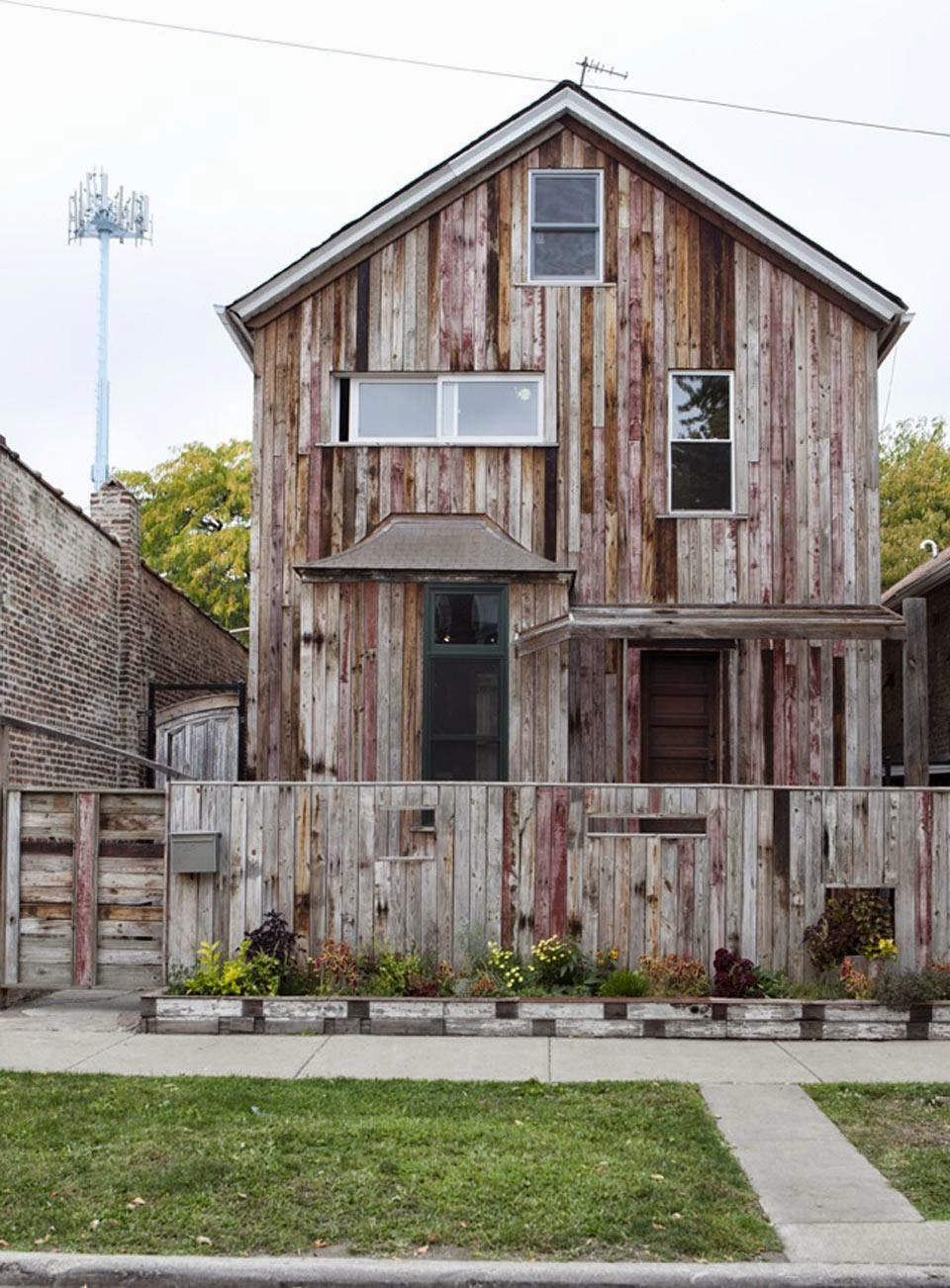
Theaster Gates
Yarn Bombing
4063 - Adv Ptg - Schedule for Work Period #1 (Fall 2014)
Advanced Painting – Fall 2014 - Norris
Work Period #1
Thurs, Aug 21: Getting Started
“Art in the Public Sphere”
Lecture,
Individual Project & Mini-Project
Schedule
Tues, Aug 26: Proposals
Students meet individually with
professor with written proposals
Thurs, Aug 28: Progress Crit / Work Period
Students present preparatory images
and project concept to class
Tues, Sept 2: Discussion / Work Period
Book Discussion and Studio Time
Thurs, Sept 4: Film: TBA
Tues, Sept 9: Mini-Project Presentations
Students share the results of their
“Art in the Public Sphere” Mini-Project
Thursday, Sept 11: Work Period
Final Class of Studio Time for
Project #1
Tuesday, Sept 16: Crit
Critique for Project #1, Individual
Project due in final form
Total Work Period: 27 Days
It is ultimately up to you to define
your production schedule and make sure you are on task to meet your deadlines.
This is an essential part of an artist’s practice.
4063 - Adv Ptg - Mini Project #1 (Fall 2014)
MINI-PROJECT
#1: Art in the Public Sphere
• Choose a previously made
piece of art, be it a painting, drawing, print, whatever.
• Take your chosen artwork
to various public spaces and photograph the work within those spaces.
• Try to choose spaces in
which you normally would not expect to see art.
• Maybe at your job, in a
parking lot, behind the bar of a restaurant, hanging from a piece of playground
equipment, at a fruit stand next to the highway.
• If you are unsure whether
you are allowed to photograph the work in a particular space, simply explain
the project and ask if it’s ok. You may be surprised how willing people are to
help out.
• Photograph your chosen
work in 6-8 different locations.
• Using a phone to
photograph is fine, but try to edit your images in Photoshop if necessary to
make them look aesthetically pleasing in their own right. If you need help with
Photoshop, I am happy to provide it.
• On Tuesday, September 9, you will bring digital
images into class and share them with the group. Think about which were most
interesting to you, which ones seemed to somehow change the meaning of the work
in an unexpected way, based on their new context. Perhaps a series of new,
different artworks will have been created through this process.
1043 - Drawing 2 - Syllabus for Fall 2014
ART 1043 : DRAWING 2
FALL 2014 – 3 Credit Hours, CRN: 63293
Section 001 : T/R 2pm-4:50pm
Instructor: John Norris, Associate
Professor of Art
Office Hours: T/R
9:30am-11am (by appointment)
E-mail: jnorris@astate.edu Phone: 972-3050 ext. 3755
Blog: norrisartclass.blogspot.com
COURSE DESCRIPTION: ART 1043 - DRAWING II -
STUDIO ART. Continuation of ART 1033. Students become more skilled with visual
elements and drawing principles. A broader range of materials and techniques
will be used. Subject matter will include still life, draped life models,
landscape, and imagined subjects. It is expected that students will spend a
minimum of three additional clock hours per week on work outside the scheduled
class time for each studio class. Additionally, the Art Major Core must be
completed prior to the BFA Review. Students enrolled in the BFA programs must
pass the BFA Review prior to enrollment in 4000 ART courses. Prerequisite, ART
1033.
STUDENT LEARNING OUTCOMES: Like Drawing 1, skills will
be developed through technical exercises in class and homework assignments
employing these techniques. The homework will allow students an opportunity to
use their acquired skills creatively and to build off of the techniques they
have learned in class. This is a STUDIO
CLASS; one which requires that students be actively involved in drawing
exercises and contribute during critiques.
Thus, students must be present and punctual in order to fully
participate.
ATTENDANCE & CLASS
PARTICIPATION:
More than 6 absences will result in a grade of F for the course. All late work
will be counted off 10 points for each class period late (Example: if your work
merits a 93 but is 2 class periods late, then your grade will be a 73). Participation counts as 25% of your grade and
is based on the following considerations: 1. Being present, punctual, and
prepared for class 2. Focus on and completion of exercises during class 3.
Participation during critiques, discussions, and dialogues 4. Maintenance of
the shared studio space, including cleaning up after work sessions, respecting
shared tools and resources, and storing work and materials appropriately. After 2 absences, 10 points will be
subtracted from your participation grade for each class missed. 20 points will
automatically be deducted from your final participation grade if you miss the
Final Critique.
GRADING: Grading will be based on
assignments (which will be submitted in portfolio form), your sketchbook, and
class participation. The portfolios will make up 50% of your grade, and your
sketchbook and class participation will each make up 25%.
A: 90
- 100% B: 80 - 89% C: 70 - 79%
D: 60 - 69% F: 0 - 59%
Portfolio
and sketchbook grades will be based on the following elements: 1) Indications
that the student has understood the assignment and is employing its specific
techniques. 2) a sense of quality showing that the students has invested a
significant amount of time and focus into the assignment. 3) The overall
success of the final image based on formal elements (composition, line quality,
sense of light & volume, etc.) as well as creativity. AGAIN, TURNING IN
ASSIGNMENTS LATE AUTOMATICALLY REDUCES YOUR GRADE. IF YOU ARE CONFUSED ABOUT GRADING, FEEL FREE
TO ASK QUESTIONS.
CLASS STRUCTURE (subject to
change):
Perspective Refresher – Conceptual & Observational Exercises –
Still Life
Line – Spacial Still Life – Sketchbook – Blind Contour
Value Refresher – Value Scale / Value Shape Exercises – Still Life
Space – Interior – Sketchbook
Space – Interior – Large Scale
Space – Exterior – Landscape
Figure – Skull Studies – Anatomy /
Proportion
Figure – Head Studies – Line
Figure – Head Studies – Value
Mixed Media – Abstraction
Process – Conceptual Approaches
Final Project - TBD
YOU
WILL BE WORKING OUTSIDE OF CLASS VERY MUCH. BE PREPARED TO COME INTO THE CLASS
ROOM OUTSIDE OF CLASS AND TO WORK ON DRAWINGS AT HOME.
BOOK / BLOG: We will NOT purchase a text
for Drawing I. However, you will often be given information in the form of a
class blog:
NORRISARTCLASS.BLOGSPOT.COM
You
will be expected to check this regularly as part of your class participation.
The blog will serve as a supplement; not as a substitute for being in class. It
will provide images, examples, portfolio lists, etc.
MATERIALS: Students will be required to
purchase the following materials. Most materials can be found at the ASU
Bookstore and the Wolf Bookstore. Some will be available at Hobby Lobby and
various hardware stores.
-9x12
Sketchbook (preferably Strathmore 400 series)
-18x24
pad of Strathmore Drawing Paper (preferably 400 series)
-18x24
pad of Newsprint
-drawing
board with clips: a 25 x 28 piece of masonite will work
-vine
or willow (soft is best) charcoal
-sandpaper
for charcoal sharpening
-compressed
charcoal
-shammy
cloth
-gray
kneaded eraser and white Factis-type eraser
-graphite
pencils: 2H, HB, 2B, 4B, 6B
-pencil
sharpener
-small
box to contain materials
-spray
fixative
WE
WILL DISCUSS THE PURCHASE OF OTHER MATERIALS FOR INDIVIDUAL PROJECTS AS WE
PROCEED.
4063 - Adv Ptg - Syllabus for Fall 2014
ART 4063: ADVANCED PAINTING
Fall 2014 – 3 Credit Hours, CRN: 61945
Section 001: T/R 5:30-8:20pm, Fine
Arts Building 104
Instructor: John Norris, Associate
Professor of Art
Office Hours: T/R:
9:30-11am (by appointment)
E-mail: jnorris@astate.edu Phone: 972-3050 ext. 3755
Blog: norrisartclass.blogspot.com
COURSE DESCRIPTION: Individual
work for advanced students. It is expected that students will spend a minimum
of three additional clock hours per week on work outside the scheduled class
time for each studio class. May be repeated for credit. Prerequisite, ART 3063,
3863, and ART 3330 or permission of instructor. Fall, Spring. 3.000 Credit
hours, 3.000 Lecture hours.
STUDENT LEARNING OUTCOMES: Students will pursue
individual bodies of work that seek to define a personal visual vocabulary and
conceptual continuity. Such will be accomplished by creating a small number of
long-term projects defined by each student and engaged critically through
critiques and discussions. Students will also become articulate in speaking
formally about their own work as well as that of their peers. Additionally, we
will engage in presentations, readings, and film viewings to supplement
individual endeavors. This is a STUDIO CLASS; one which requires that students
be actively involved in daily exercises and contribute during critiques. Thus, students must be present and punctual
in order to fully participate.
ATTENDANCE & CLASS
PARTICIPATION:
All late work will be counted off 10 points (aka one letter grade) for each
class period late. For example: if your work merits a 93 but is 2 class periods
late, then your grade will be a 73.
Participation counts as 25% of your grade and is based on the following considerations:
1. Being present, punctual, and prepared for class 2. Focus on and completion
of exercises during class 3. Participation during critiques, discussions, and
dialogues. After 2 absences, 10 points
will be subtracted from your participation grade for each class missed. 20
points will automatically be deducted from your final participation grade if
you miss the Final Critique.
GRADING: Grading will be based on the
final outcome of each individual project (50%), engagement in group projects
and presentations (25%), and class participation (25%).
A: 90
- 100% B: 80 - 89% C: 70 - 79%
D: 60 - 69% F: 0 - 59%
Individual
Assignments will be based on the following elements: 1) Indications that the
student has fulfilled the assignment as defined by their original proposal 2) a
sense of quality showing that the students has invested a significant amount of
time and focus into the assignment. 3) The overall success of the final product
based on formal elements (composition, technique, color, etc.) as well as conceptual
engagement, innovation, experimentation, and creative thinking. AGAIN, TURNING
IN ASSIGNMENTS LATE AUTOMATICALLY REDUCES YOUR GRADE. IF YOU ARE CONFUSED ABOUT GRADING, FEEL FREE
TO ASK QUESTIONS.
COURSE OUTLINE:
1.
Students will submit written proposals for individual projects and will be
given a 3-4 week working period in which to complete them. Work on projects
will be done largely outside of class though certain classes will be designated
as work periods.
2. We
will supplement individual projects throughout the work period with readings,
discussions, films, and gallery visits.
3. During
each work period, we will engage in either a presentation or “mini-project”
designed to consider alternate processes and/or trends in contemporary art.
4.
Projects will culminate with a final group critique and potential short-term
exhibition based on availability of space.
BOOK / BLOG:
Book:
Living and Sustaining a Creative Life,
Essays by 40 Working Artists
Edited by Sharon Louden
Blog:
NORRISARTCLASS.BLOGSPOT.COM
You
will be encouraged to check this regularly as part of your class participation.
THE BLOG SERVES AS A SUPPLEMENT; IT IS
NOT A SUBSTITUTE FOR BEING IN CLASS.
MATERIALS: As students will be working
individually to define their own bodies of work, materials will be likewise be
catered to each individual. Students are
responsible for acquiring the necessary materials for individual projects.
Paper will be provided for our collaborative works on paper project.
3033 - Drawing 3 - Syllabus for Fall 2014
ART 3033:
DRAWING 3 – FIGURE DRAWING
Fall 2014 – 3 Credit Hours, CRN:
61233
Section 001: T/R 11am-1:50pm, Fine
Arts 104
Instructor: John Norris, Associate
Professor of Art
Office Hours: T/R
9:30am-11am (by appointment)
E-mail: jnorris@astate.edu Phone: 972-3050 ext. 3755
Blog: norrisartclass.blogspot.com
COURSE DESCRIPTION: Continuation of development
of drawing skills and concepts. Students at this level should have well
developed drawing skills and good understanding of drawing principles. Undraped
life models will be provided. It is expected that students will spend a minimum
of three additional clock hours per week on work outside the scheduled class
time for each studio class. Students enrolled in the BFA programs must pass the
BFA Review prior to enrollment in 4000 ART courses. Prerequisites, ART 1013,
ART 1023, ART 1033 and 1043, ARTH 2583, ARTH 2593. May be repeated for credit.
STUDENT LEARNING OUTCOMES: Like Drawing 1 & 2,
skills will be developed through technical exercises in class and homework assignments
employing these techniques. The homework will allow students an opportunity to
use their acquired skills creatively and to build off of the techniques they
have learned in class. This is a STUDIO
CLASS; one which requires that students be actively involved in drawing
exercises and contribute during critiques.
Thus, students must be present and punctual in order to fully
participate. By the end of the course, students will be well versed in various
aspects of drawing the human form, including gesture, anatomy, and proportion.
Students will also become familiar with contemporary and historical figurative
artists, investigate multiple approaches to process and media, and explore
narrative and conceptual approaches to figurative drawing.
ATTENDANCE & CLASS
PARTICIPATION:
All late work will be counted off 10 points (aka one letter grade) for each
class period late. For example: if your work merits a 93 but is 2 class periods
late, then your grade will be a 73.
Participation counts as 25% of your grade and is based on the following
considerations: 1. Being present, punctual, and prepared for class 2. Focus on
and completion of exercises during class 3. Participation during critiques,
discussions, and dialogues 4. Maintenance of the shared studio space, including
cleaning up after work sessions, respecting shared tools and resources, and
storing work and materials appropriately. After
2 absences, 10 points will be subtracted from your participation grade for each
class missed. 20 points will
automatically be deducted from your final participation grade if you miss the
Final Critique.
GRADING: Grading will be based on
assignments (which will be submitted in portfolio form), your sketchbook, and
class participation. The portfolios will make up 50% of your grade, and your
sketchbook and class participation will each make up 25%.
A: 90
- 100% B: 80 - 89% C: 70 - 79%
D: 60 - 69% F: 0 - 59%
Portfolio
and sketchbook grades will be based on the following elements: 1) Indications
that the student has understood the assignment and is employing its specific
techniques. 2) a sense of quality showing that the students has invested a
significant amount of time and focus into the assignment. 3) The overall
success of the final image based on formal elements (composition, line quality,
sense of light & volume, etc.) as well as creativity. AGAIN, TURNING IN
ASSIGNMENTS LATE AUTOMATICALLY REDUCES YOUR GRADE. IF YOU ARE CONFUSED ABOUT GRADING, FEEL FREE
TO ASK QUESTIONS.
COURSE OUTLINE: We will be investigating several
concepts that were covered in Drawing 1 & 2 and building upon them.
Furthermore, we will fully investigate the figure in terms of anatomy,
movement, process, and concept. In doing so, we will perform short-term formal
exercises in class, create long-term multi-session drawings, and you will be
given ambitious homework projects involving the figure.
1. We
will discuss a new concept and do several exercises based
on this idea. We may also do readings
and/or have slide talks.
2. We
will do a series of more extended drawings connected to the concept.
3. We
will do a series of sketchbook drawings to further investigate.
4. We
will work on extended drawings inside/outside class that may take up
to 2/3 weeks to complete.
5. We
will critique the work and its relation to the concept as a class.
CLASS STRUCTURE (subject to
change):
Figure – Skeleton Studies – Bridgman Anatomy / Proportion
Figure
– Master Studies – Sketchbook
Figure
– Gesture – Blind Contour - Moveable Masses
Figure
– Anatomy / Proportion – Bridgman Sketchbook
Figure
– Moveable Masses – Large Scale: Craft
Figure
– Anatomical Studies – Head, Trunk - Sketchbook
Figure
– Figure – Value – Self-Portrait
Figure
– “Beautiful Scribble” – Large Scale
Figure
– Anatomical Limb Studies – Arms - Sketchbook
Figure
– Anatomical Limb Studies – Legs - Sketchbook
Figure
– Figure in Interior – Large Scale
Figure
– Value – Large Scale: Arches
Figure
– Figure in Motion Studies – Large Scale: Craft
Figure
– Multimedia Figure Studies – Large Scale
Figure
– Final Projects (In-Class & Homework) – Large Scale
YOU WILL BE WORKING OUTSIDE OF
CLASS REGULARLY. BE PREPARED TO COME INTO THE CLASS ROOM OUTSIDE OF CLASS AND
TO WORK ON DRAWINGS AT HOME.
BOOK / BLOG: Students are required to
purchase the following text:
How to Draw the
Human Figure: An Anatomical Approach
by Louis Gordon
We
will do regular readings from the book, and students will be expected to have
the text with them at all times during class.
Handouts will also occasionally be made available. However, students
will usually receive additional info, image examples, assignment
specifications, and portfolio details via the following blog:
NORRISARTCLASS.BLOGSPOT.COM
You
will be expected to check this regularly as part of your class participation. THE BLOG SERVES AS A
SUPPLEMENT;
IT IS NOT A SUBSTITUTE FOR BEING IN CLASS.
MATERIALS: Students will be required to
purchase the following materials. Most materials can be found at the ASU
Bookstore and the Wolf Bookstore. Some will be available at Hobby Lobby and
various hardware stores.
-9x12
Sketchbook (preferably Strathmore)
-18x24
pad of Strathmore Drawing Paper (preferably 400 series)
-18x24
pad of Newsprint
-drawing
board with clips
-vine
or willow (soft is best) charcoal
-conte
crayon: black, white, sanguine
-sandpaper
for charcoal sharpening
-compressed
charcoal
-charcoal
pencil
-shammy
cloth
-gray
kneaded eraser and white Factis-type eraser
-graphite
pencils: 6H, 2H, HB, 2B, 4B, 6B
-pencil
sharpener
-small
box to contain materials
WE
WILL DISCUSS THE PURCHASE OF INDIVIDUAL SHEETS OF HIGH QUALITY ARCHES COVER PAPER (30 X 22) FOR
INDIVIDUAL PROJECTS AS WE PROCEED. ARCHES STONEHENGE OR RIVES BFK MAY ALSO BE
USED AS SUITABLE SUBSTITUTES.
Subscribe to:
Posts (Atom)